
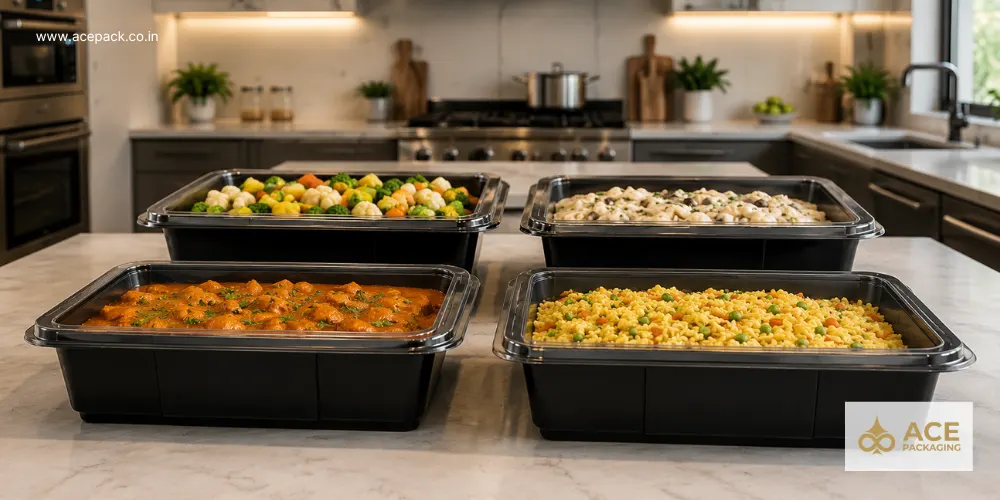
As food production scales up to meet growing consumer demand, businesses need packaging and storage solutions that support efficiency, hygiene, and operational consistency. Central kitchens, food manufacturing facilities, commercial catering operations, and food processing units handle large volumes of ingredients and finished products daily. Selecting the right food processing containers is critical for maintaining food safety, improving workflow, and ensuring smooth transportation within production environments.
Among the most trusted solutions available today, RE Series Containers have become a preferred choice for large-scale food operations. Their robust construction, food-grade materials, and versatile applications make them suitable for various food handling and storage requirements.
This guide explores why RE Series Containers are widely used in central kitchens, food processing units, and food production facilities, along with the benefits they offer to modern food businesses.
RE Series Containers are durable food-grade plastic containers designed for food storage, handling, transportation, and processing applications. They are widely used across food manufacturing operations because they offer strength, hygiene, and reliable performance.
These containers are commonly used for:
RE Series Containers are designed to simplify food handling throughout various stages of production. Their sturdy structure supports frequent movement, stacking, and transportation within food manufacturing facilities.
The containers help improve:
Many businesses use food processing containers to provide additional protection against contamination while maintaining product freshness.
One of the primary reasons industries choose food grade plastic containers is their suitability for direct food contact. These containers help support hygienic food storage and handling practices.
Unlike standard storage bins, industrial food containers are engineered for demanding environments where repeated use is required.
Many food manufacturers require dependable bulk food storage containers that can accommodate large quantities of raw materials and finished products.
RE Series Containers function as reliable food handling containers, allowing workers to safely move ingredients and products throughout production facilities.
Properly designed containers contribute to better space utilization and operational efficiency in warehouses, processing units, and central kitchens.
Food processing units handle multiple production stages daily. Reliable food storage containers help maintain an organized workflow while reducing handling challenges.
Food businesses rely on smooth material movement throughout production and distribution networks. RE Series Containers help improve supply chain efficiency by simplifying transportation and storage processes.
Maintaining hygiene standards is a priority in food manufacturing operations. Food-grade containers help support compliance with food safety requirements and safe food handling practices.
Proper storage solutions minimize contamination risks and help protect ingredients and finished products during transportation and storage.
Large-scale food preparation facilities use central kitchen containers for ingredient storage, food preparation, and internal logistics.
Businesses involved in food manufacturing depend on food processing containers to support production workflows and material management.
Catering companies require dependable commercial kitchen containers for transporting and storing ingredients and prepared foods.
Manufacturers producing packaged meals often utilize containers for ready-to-eat food production to maintain consistency and hygiene.
Large-scale facilities require industrial food packaging containers that can withstand demanding operational conditions.
Food manufacturers use RE Series Containers for storing and organizing ingredients before processing.
Workers utilize food transportation containers for central kitchens to move products efficiently between preparation and packaging areas.
Businesses rely on commercial food storage containers for temporary storage before dispatch and distribution.
RE Series Containers provide practical solutions for handling large quantities of food products and raw materials.
Always choose containers manufactured from high-quality food-safe materials.
Evaluate production volume and storage requirements before selecting container sizes.
Select containers designed to support food safety compliance and easy cleaning.
Consider transportation frequency, stacking requirements, and operational environments.
Assess whether containers will be used for ingredient storage, processing, transportation, or finished product management.
Using containers not designed for food applications can create hygiene and compliance challenges.
Selecting the wrong size can reduce operational efficiency and increase handling complexity.
Food processing environments require containers capable of handling repeated use.
Long-term value should include durability, reliability, hygiene, and operational performance.
Businesses should choose storage solutions that can support future expansion and increased production volumes.
Food businesses increasingly prefer RE Series Containers for food processing units because they provide:
Their versatility makes them suitable for multiple applications across food production facilities, processing plants, and central kitchen operations.
Ace Pack provides dependable food processing packaging solutions designed to support the evolving needs of food manufacturers, processors, caterers, and central kitchen operators.
Key advantages include:
Ace Pack understands the challenges faced by food processing businesses and delivers practical storage and handling solutions that help improve operational efficiency and food safety.
As food production and processing operations continue to expand, businesses require dependable storage and handling solutions that support productivity, hygiene, and operational efficiency. RE Series Containers have become an essential component of modern food manufacturing operations due to their durability, versatility, and food-grade construction.
Whether used as central kitchen containers, commercial kitchen containers, bulk food storage containers, or food processing containers, these solutions help streamline workflows, improve food handling practices, and support food safety compliance.
For businesses seeking reliable food processing packaging solutions, RE Series Containers offer a practical and effective solution for managing today's demanding food production environments.
.webp)


