
.webp)
A salad has about an hour before it starts telling on you. Leaves soften, dressing pools at the bottom, cut fruit weeps into whatever sits beside it. By the time the box reaches a customer, the difference between a fresh meal and a sad one comes down to decisions made at the packing counter, long before anyone opens the lid.
Fresh produce is the hardest category to package well, because the food itself keeps changing after it is packed. Containers cannot stop that, but the right container and the right habits can slow the damage. Deli Series Containers are a common choice for salads, fruit, and fresh cuts, and the way a kitchen uses them matters as much as the containers themselves.
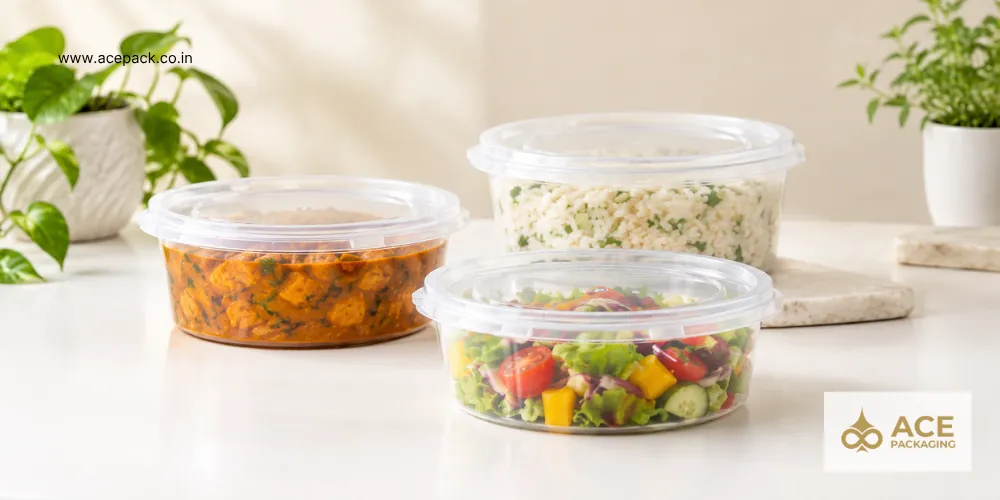
Crisp greens come from three things working together. Dry produce going in, wet items kept apart, and a container that closes securely and holds its shape in a stack. Deli Series Containers help with the last part. They come in 8 OZ, 12 OZ, 16 OZ, 24 OZ, and 32 OZ sizes, are made from food-grade polypropylene (PP 05), and have leak-proof, stackable lids. No container can promise freshness on its own, so the packing routine does most of the work.
Understanding the problem makes the fix easier to spot. Three things usually spoil a packed salad.
Moisture. Leaves packed damp release water and soften quickly. Washed greens that are not properly dried carry that moisture straight into the container.
Contact with wet ingredients. Tomatoes, cucumbers, and cut fruit release juice. When they sit directly on leaves, the leaves absorb it.
Crushing and heat. Overfilled containers press delicate leaves under their own weight, and warm storage speeds up every other problem.
Most of these are habits rather than packaging flaws, which means a kitchen can improve results without changing suppliers, simply by changing the order in which things go into the box.
A container supports a good packing routine in practical ways.
A secure, leak-proof lid keeps dressing, juice, and condensation from escaping into a delivery bag. A consistent shape means packers fill to the same level every time, which avoids crushing. A stackable design lets boxes sit neatly in a chiller, so produce stays cold and undisturbed rather than shoved into whatever space is left.
What a container cannot do is fix wet ingredients or warm storage. The Deli Series pages do not describe vented lids or any freshness-extending feature, so it is best not to expect one. Treat the container as a good carrier and handle the rest through process.
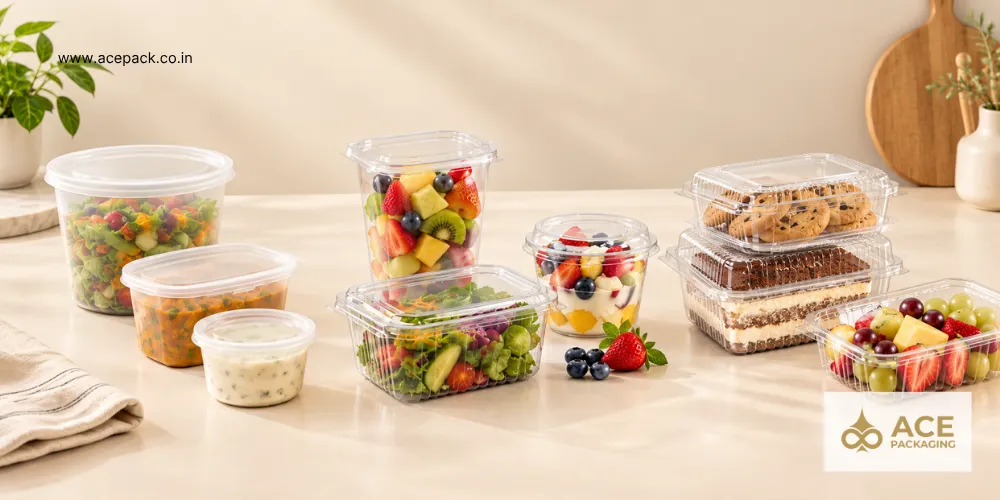
The Deli Series range covers a useful spread. The 8 OZ size is about 42mm tall with a 120mm top diameter, and the 12 OZ size is about 63mm tall with the same top diameter. Larger sizes run up to 32 OZ. The pairings below are suggestions to test with real produce, not rules.
Both the 8 OZ and 12 OZ sizes are supplied in boxes of 240 pieces, which is worth remembering when planning storage for a cafe or cloud kitchen.
Small steps, repeated consistently, make the biggest difference.
Dry leaves thoroughly after washing, since moisture is the main enemy. Chill produce before packing, so it enters the container cold rather than warming up inside it. Layer with intent, putting sturdier items such as grains, beans, or chopped vegetables at the bottom and delicate leaves on top. Keep wet or juicy ingredients such as tomatoes and cut fruit away from the leaves, or pack them separately. Do not overfill, because a lid pressing on leaves bruises them.
Dressing deserves its own rule. Pack it in a separate small container and let the customer add it. Portion Cups suit this well, with sizes from 50ml, and Hinge Cups are an option for sealed dressings and dips.
Fruit has its own habits. Cut apple and banana brown. Melon and berries leak. Citrus drips.
Many kitchens slow browning with a light coating of lemon or similar acidic juice. Pack juicy fruit separately from drier items, or give it its own container. Keep pieces similar in size, so the box looks tidy and packs evenly. And keep fruit cold until the last moment before it goes into a bag.
A leak-proof lid matters more for fruit than almost any other category, because even a small amount of juice in a delivery bag can spoil other items.
Fresh produce sells with the eyes. Customers want to see the colour of the greens and the cut of the fruit before they commit. Where a container allows the contents to be seen, it supports that decision.
Ace Packaging has written about how Deli Series Containers support product visibility on retail shelves, which is worth reading for businesses selling from a counter or chiller. If clarity matters for your product, confirm the exact version you need with the team before ordering in bulk.
Packing damp leaves. The most common cause of soggy salad.
Dressing the salad at the counter. Dressing softens leaves quickly. Keep it separate.
Overfilling the container. Pressure from the lid crushes leaves and squeezes out moisture.
Ignoring cold storage. Even good packing fails if boxes sit warm before delivery.
Skipping a delivery test. Pack real salads and carry them through an actual delivery run before ordering a large quantity.
Using one size for every item. A fruit cup in a large bowl looks sparse and shifts around.
Ace Packaging manufactures Deli Series Containers alongside a wider range of food-grade packaging, so a business can source main containers and small extras from one supplier. The team has also written about Deli Series use for takeaway and delivery.
A few reasons food businesses work with Ace Packaging.
Manufacturing experience. More than 15 years of producing food-grade containers supports consistent sizing across bulk orders.
Customization options. Specifications can often be adjusted, and the capabilities page is a good place to start.
Certified processes. Products are certified against domestic and global standards, which helps businesses that document their packaging.
Direct order support. The team helps match container size and quantity to the menu being packed.
Businesses planning a salad or fresh produce range can contact the Ace Packaging team to ask about sizes, samples, and lid options.
Keeping greens crisp is mostly a packing discipline. Dry the leaves, chill the produce, separate the wet items, and pack the dressing on the side. Deli Series Containers support that routine with leak-proof lids, stackable shapes, and a spread of sizes from 8 OZ to 32 OZ. Testing real salads through a real delivery run, before a bulk order, is the surest way to see how a container performs with your menu.
.webp)