
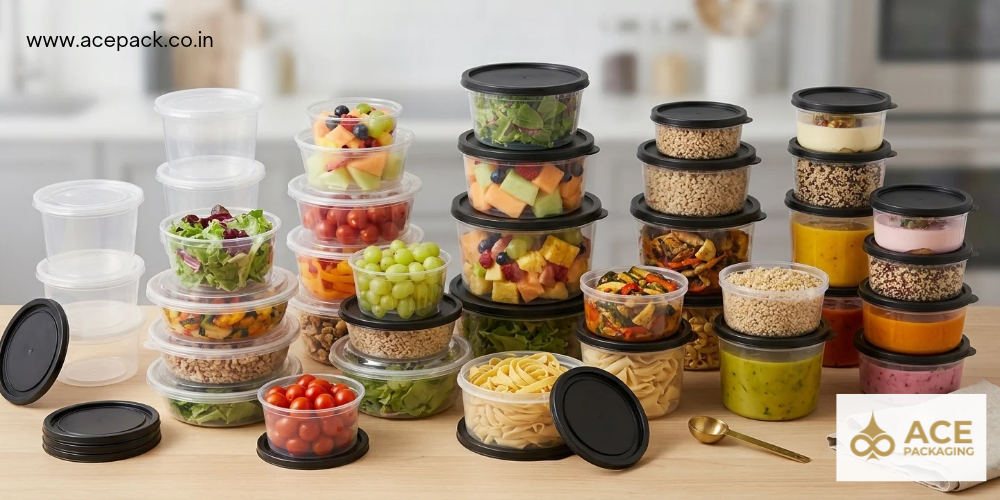
For food packaging distributors, choosing the right container is not simply about selecting a shape or comparing prices. Capacity, dimensions, material quality and packaging quantities all influence whether a product meets the requirements of restaurants, food manufacturers, caterers and retail businesses.
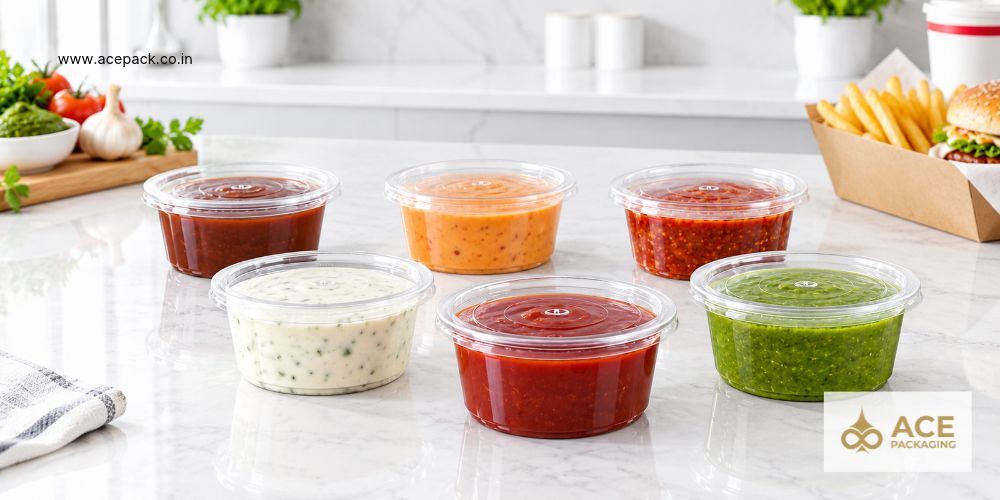
Round plastic containers are widely used for packaging different food products, including curries, rice, salads, desserts, snacks and prepared meals. However, two containers with similar capacities may have different heights, diameters and storage requirements. Understanding these differences helps distributors recommend suitable products and manage bulk orders more effectively.
Whether you are sourcing round food packaging containers for restaurants or expanding your product catalogue, this guide explains the key specifications to evaluate before selecting a supplier. It also highlights the round container range available from Ace Packaging.
Capacity tells buyers how much a container can hold, while dimensions explain the physical space it occupies. Both measurements are important when selecting packaging for commercial applications.
For example, a food business may require a compact container for individual servings, while another may need a deeper option for gravies, curries or larger meal portions. Choosing based only on the capacity printed on the product can lead to unsuitable packaging if the actual dimensions are overlooked.
For distributors, checking these specifications helps with:
A well-planned product range should offer practical size options without creating unnecessary complexity in inventory management.
When evaluating round food containers, distributors should check three important measurements: top diameter, bottom diameter and height.
Top diameter: This measures the width across the upper opening. It helps buyers understand the available opening space for filling and serving.
Bottom diameter: This indicates the width of the container base. It can influence how containers fit together during storage and how much shelf space they occupy.
Height: This determines the vertical space available inside the container and helps distinguish shallow formats from deeper options.
Ace Packaging lists round containers in several capacities, including 225 ml, 250 ml, 300 ml, 450 ml, 500 ml and 1,000 ml. The listed material is PP 05, and the product range specifies food-grade suitability.
| Capacity | Top diameter | Bottom diameter | Height |
| 225 ml | 120 mm | 98 mm | 31 mm |
| 250 ml | 120 mm | 97 mm | 38 mm |
| 300 ml | 120 mm | 41 mm | 102 mm |
| 450 ml | 120 mm | 60 mm | 98 mm |
| 500 ml | 120 mm | 67 mm | 97 mm |
| 1,000 ml | 120 mm | 87 mm | 125 mm |
These specifications provide a starting point for product comparison. Distributors should confirm the latest dimensions, capacity and physical samples with the manufacturer before preparing catalogues or committing to bulk orders.
The most suitable container depends on the food product, serving quantity and intended use. A container designed for a small dessert portion may not be appropriate for a larger meal or a liquid-based food product.
Consider these application-based requirements:
These are general selection considerations, not fixed rules. Actual food volume, density and filling space can vary. For instance, a container filled with rice may hold a different weight from one filled with gravy, even when both have the same volume capacity.
Distributors should encourage customers to test the intended food product in a sample container before standardising packaging across their operations.
Capacity alone does not determine whether packaging is suitable for commercial use. Buyers should also review material specifications, construction and consistency.
Ace Packaging's listed Round Containers range uses PP 05 (polypropylene) and identifies the products as food-grade. When evaluating food grade round containers, distributors should request relevant material information and supporting food-contact documentation.
Other useful quality checks include:
It is also important to verify whether the selected container is suitable for the intended food temperature and handling conditions. Do not assume that every polypropylene container has identical microwave, freezer or heat-resistance properties. Confirm the specific product's approved usage with the manufacturer.
For distributors, purchasing decisions must account for more than individual product specifications. Carton quantities, storage space, stock movement and repeat-order requirements all influence the overall buying decision.
Ace Packaging lists its Round Containers with packaging quantities of 500 pieces per set. Distributors should confirm the current packing configuration and order terms before calculating their inventory requirements.
A few practical planning steps can help:
Review customer demand: Identify which capacities are regularly requested by restaurants, caterers, food manufacturers and retailers.
Prioritise commonly ordered sizes: Keep the most frequently requested products available while avoiding excessive stock of slower-moving options.
Calculate storage requirements: Consider carton dimensions, available warehouse space and the number of units required for each product size.
Plan replenishment: Review average sales and supplier lead times to decide when another order should be placed.
A structured inventory plan helps distributors maintain availability without tying up unnecessary warehouse space or working capital.
Selecting a reliable round container manufacturer is an important part of building a consistent packaging supply business. A competitive quotation is useful, but it should not be the only deciding factor.
Before finalising a supplier, distributors should evaluate:
For businesses searching for a round plastic food containers manufacturer in India, these checks help create a more informed supplier comparison and reduce the possibility of ordering unsuitable packaging.
Ace Packaging manufactures injection-moulded food packaging products and offers a dedicated Round Containers range for commercial packaging requirements.
The range includes capacities from 225 ml to 1,000 ml, with PP 05 material specifications and listed food-grade suitability. This selection gives distributors different capacity options to evaluate for their customers' food packaging needs.
Alongside round containers, Ace Packaging offers other product categories, including Hinge Cups, Portion Cups, RO-Series Containers, RE Series Containers, Natraj Containers and Deli Series Containers.
Distributors can explore the Ace Packaging Round Containers range to review the listed product specifications. The wider plastic food containers collection is also useful when comparing packaging formats for different customer requirements.
Selecting the right round container requires a clear understanding of capacity, dimensions, material and intended food application. For distributors, these details are equally important for recommending suitable products, managing inventory and planning bulk purchases.
If you are sourcing round plastic storage containers, round takeaway containers or other round packaging containers, compare the specifications carefully before placing an order.
Explore the Round Containers range from Ace Packaging and discuss your capacity, quantity and product requirements with the team.
Contact Ace Packaging at acepack2011@gmail.com to enquire about available options and bulk supply.
.webp)