
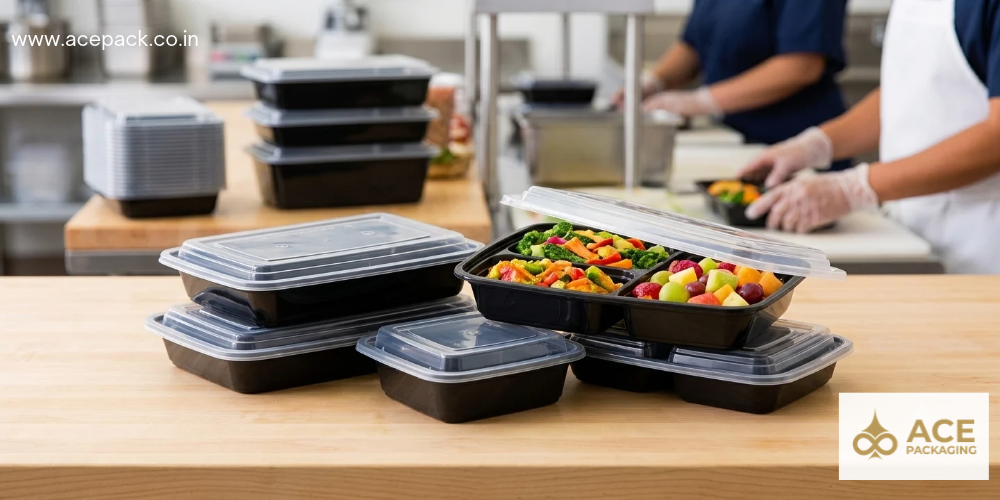
Choosing food packaging for a commercial operation involves more than selecting a container that looks suitable. Dimensions, material, wall strength, lid compatibility and packing quantities all influence how well a container fits into everyday operations. For food packaging distributors, checking these details before ordering is especially important because the same product may be supplied to restaurants, caterers, food manufacturers and takeaway businesses with different requirements.
RE Series Containers offer rectangular packaging options for businesses that need practical food storage and packaging formats. However, different models have different dimensions and heights, making it important to compare individual specifications before selecting a product.
This guide explains the key details buyers should evaluate when purchasing RE Series containers, with a closer look at the product range available from Ace Packaging.
A container may appear suitable in a product photograph, but its actual dimensions can determine whether it works for a particular food application. For example, a shallow container may be appropriate for flatter food portions, while a deeper format may provide more room for prepared meals or larger servings.
For distributors, incorrect product selection can lead to unnecessary stock, customer dissatisfaction and avoidable returns. Checking specifications before ordering helps prevent these problems.
Before choosing RE food packaging containers, consider:
These details make it easier to compare models and recommend suitable products to customers.
Dimensions are among the most important specifications to check when purchasing RE Series plastic containers. Since the range includes different rectangular formats, buyers should not assume that every model has the same proportions or usable space.
Ace Packaging lists several models with different measurements:
| RE Series model | Top dimensions | Height |
| AP-RE-12 | 140 × 115 mm | 47 mm |
| AP-RE-232 | 220 × 150 mm | 41 mm |
| AP-RE-38 | 223 × 152 mm | 63 mm |
| AP-RE-58 | 290 × 200 mm | 56 mm |
The RE Series comes in different sizes to suit varying food packaging needs. Models such as the AP-RE-12 and AP-RE-232 offer different dimensions, while the AP-RE-38 and AP-RE-58 provide other size options. Reviewing each model can help distributors identify a suitable container for their product range.
Selecting a suitable container starts with understanding what will go inside it. A packaging format designed for individual food portions may not be appropriate for larger meal servings or catering requirements.
Consider the following factors:
Food quantity: Estimate the actual quantity of food that needs to be packed. Do not rely on external dimensions alone to determine usable capacity.
Food consistency: Dry food, rice, curries and semi-liquid preparations occupy space differently. Products containing gravy may require additional headroom to reduce contact with the lid.
Serving requirements: Individual meal portions and larger food orders may require different container footprints.
Packing method: Consider whether the food is filled manually or through a production-line process. The opening dimensions and container height can influence filling convenience.
For instance, a shallower RE Series model may be worth evaluating for flatter food portions, while a deeper option may be more suitable for dishes that need additional vertical space. Testing the actual food product in a sample container is the most practical way to confirm suitability.
Material quality is another important factor when evaluating food grade RE Series containers. Ace Packaging's listed RE Series models specify PP 05 (polypropylene) as the material. The product pages also describe the containers as sturdy, with high strength and 100% virgin quality.
When comparing plastic RE containers, distributors should review more than the material name. Ask for relevant food-contact information and documentation for the specific product.
Other checks worth considering include:
Buyers should also confirm any temperature-related usage claims for the specific model. The product listings identify microwave and freezer suitability for certain models, but these properties should not automatically be assumed for every container in the range. Follow the manufacturer's instructions for the selected product.
A container and its lid should be evaluated as one packaging system. Even when the container dimensions appear suitable, an incorrectly fitted lid can create difficulties during packing, storage and transportation.
Before confirming an order, request a sample and check:
Lid fit: The lid should align correctly with the container rim and close consistently.
Opening and closing: Check whether staff can close and open the container conveniently during normal operations.
Stacking: Place multiple filled and empty containers together to understand how they behave when stacked.
Handling: Test the packaging with the intended food product and observe how it performs during routine movement.
These checks are particularly useful for businesses that handle regular takeaway orders or prepare food in advance. Buyers considering reusable RE containers should also confirm the manufacturer's cleaning, handling and reuse guidance rather than assuming unlimited reuse.
For distributors, selecting the correct model is only one part of the purchasing decision. Carton quantity, warehouse space, order frequency and delivery schedules also need attention.
Ace Packaging's listed RE Series product pages specify a packing quantity of 150 pieces per set. Confirm whether this quantity applies to the selected model and whether the current packaging configuration has changed before preparing your order.
A few practical steps can make purchasing easier:
Distributors supplying multiple customers may benefit from maintaining a balanced selection of RE packaging containers rather than ordering only one size.
Before choosing an RE Series container manufacturer, prepare a specification checklist. This helps ensure that quotations from different suppliers are being compared on the same basis.
Ask the manufacturer:
A supplier that communicates specifications clearly makes it easier for distributors to plan purchases and manage customer expectations.
Ace Packaging manufactures injection-moulded food packaging products and offers RE Series containers as part of its wider product portfolio.
The range includes different rectangular formats, with model-specific dimensions and PP 05 material specifications. This gives distributors and food businesses options to evaluate according to their portion sizes, storage requirements and packing processes.
Businesses can explore the Ace Packaging RE Series Containers range to review the available models and their specifications.
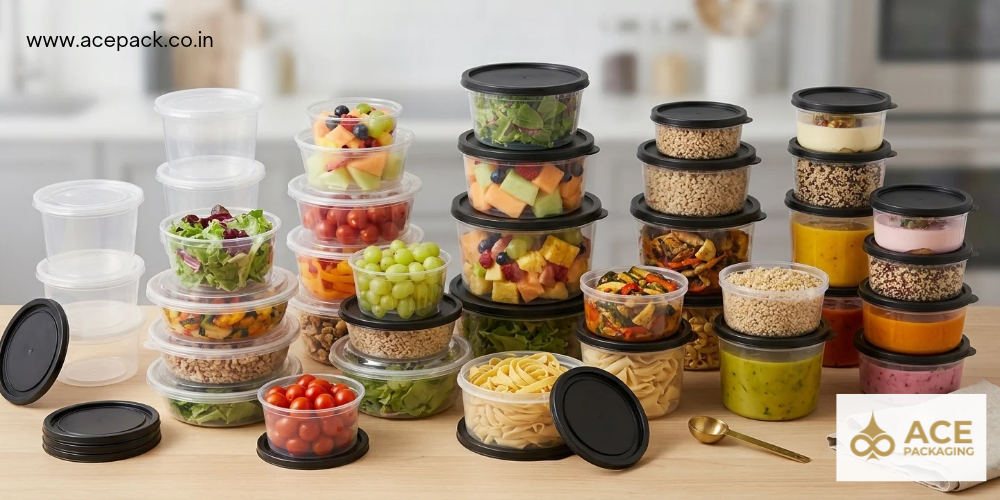
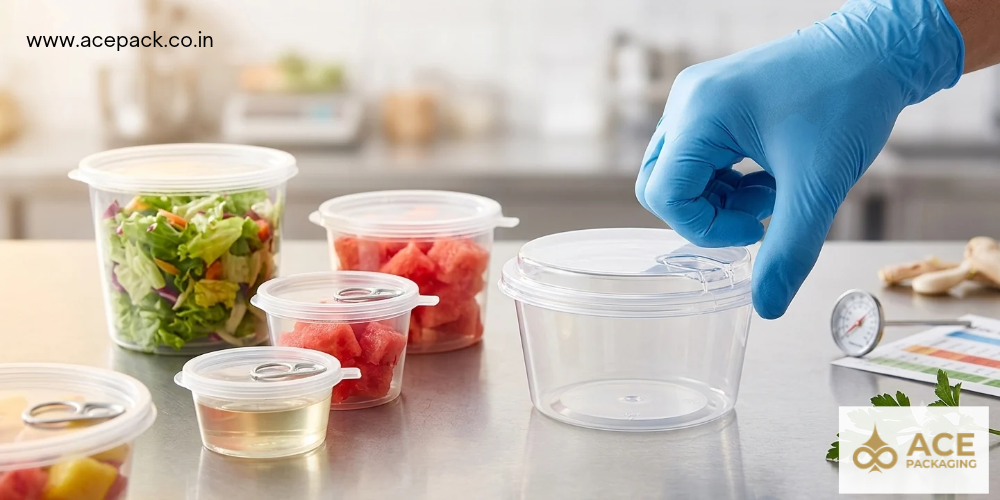
The company also offers other packaging categories, including RO-Series Containers, Round Containers, Portion Cups and Hinge Cups. This wider selection can be useful for businesses sourcing different food packaging formats from one manufacturer.
For buyers comparing RE packaging containers for regular supply, discussing the intended application, model dimensions and required order quantities with the team is a sensible step before finalising a purchase.
Need RE Series containers for bulk supply? Get a quote from Ace Packaging today! Share your required specifications and order quantity to receive product details and pricing.
.webp)