
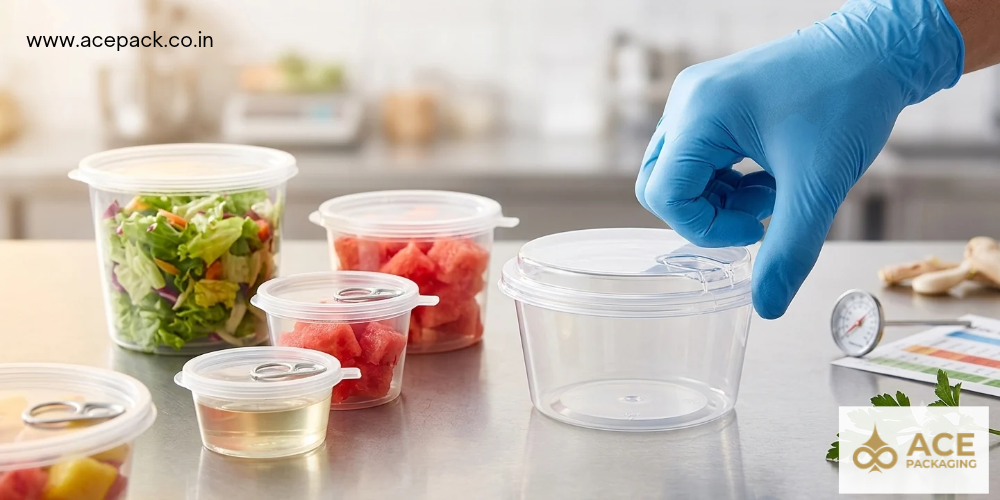
Hinged plastic food containers are widely used by restaurants, takeaway outlets, food retailers and catering businesses because they combine a container and an attached lid in one convenient design. However, not every hinged plastic container offers the same level of closure performance. The quality of the hinge, lid alignment, material construction and overall fit can influence how well the packaging performs during everyday commercial operations.
For businesses purchasing packaging in bulk, selecting the right container involves more than comparing prices or appearance. A container must suit the food being packed, remain properly closed during normal handling and support efficient storage and transportation.
Understanding these factors can help businesses make better purchasing decisions when evaluating hinged plastic food containers for their packaging requirements.
Closure strength plays an important role in maintaining packaging reliability. If a lid does not fit properly or the closing mechanism is inconsistent, the container may open during handling, storage or transportation.
For restaurants and food delivery businesses, this can create avoidable packaging problems, including spills, damaged presentation and customer complaints. Retailers may also face difficulties when containers are handled repeatedly during stocking and product display.
A well-designed plastic container with a hinged lid should offer a suitable balance between easy opening and secure closing. The lid should remain aligned with the base without requiring excessive force to operate.
Businesses should therefore evaluate closure performance as part of their packaging selection process rather than treating it as a minor product feature.
Before placing an order, food businesses should consider the following factors to understand whether a particular hinged plastic box meets their operational requirements.
The hinge connects the lid to the container base, making its construction an important consideration. A poorly formed or excessively rigid plastic box hinge may affect opening and closing convenience.
Buyers should examine whether the hinge moves smoothly, remains connected and shows no visible cracks, stress marks or deformation. It is also useful to open and close sample containers several times to assess their practical performance.
For businesses handling large quantities of food packaging, consistent hinge construction can help reduce operational inconvenience.
A hinged container should close evenly around its intended contact points. Misalignment, loose edges or uneven fitting can affect how securely the lid stays in position.
During sample evaluation, buyers should check:
These checks are particularly important for takeaway food businesses where containers may be packed, stacked and transported frequently.
Material selection influences the container's strength, flexibility, appearance and suitability for different food applications.
Buyers evaluating hinged plastic containers should consider the material specification, wall consistency, surface finish and resistance to deformation under expected handling conditions.
A container that is too flexible may lose its intended shape when filled or stacked. On the other hand, excessive rigidity around the hinge area may affect opening convenience.
The right balance depends on the container design and its intended application. Businesses should confirm material details and food-contact suitability with the manufacturer before ordering.
Container dimensions should match the actual food portion rather than being selected only by appearance.
Small plastic hinged containers can be useful for compact servings, samples and selected condiment applications. Larger formats may be more appropriate for food portions that require additional internal space.
When comparing a hinged plastic box, buyers should consider:
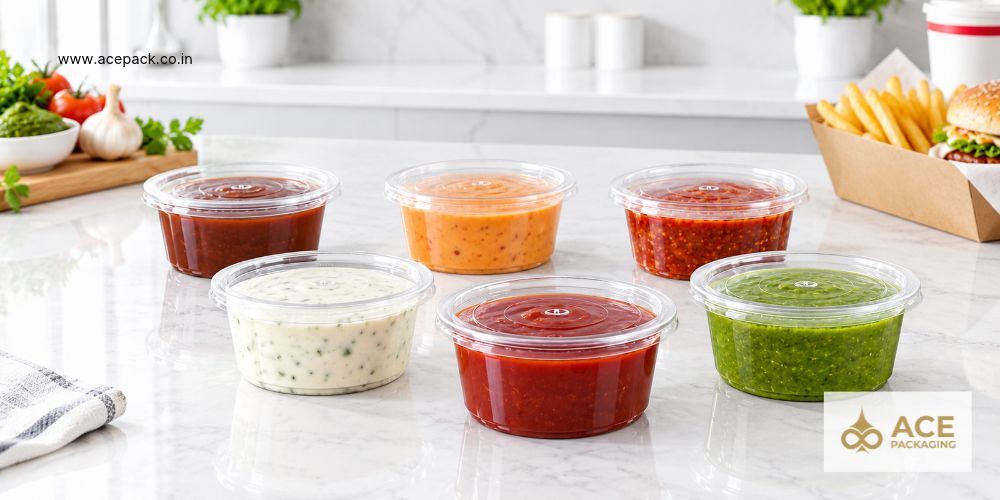
For sauces and condiments, hinged plastic sauce containers should be evaluated according to serving volume, product consistency and the way the container will be handled.
Packaging also influences how customers perceive a food product. A clear plastic box with a hinged lid allows buyers to view the contents without opening the container.
This can be useful for bakeries, confectionery businesses, takeaway counters and food retailers that depend on product visibility.
Clear plastic hinged boxes can help display the colour, arrangement and overall appearance of packaged food. However, businesses should also check surface clarity, scratches, distortion and lid alignment when reviewing samples.
The packaging should complement the food presentation while providing practical protection during handling.
Commercial packaging is often moved through several stages, from filling and packing to storage, dispatch and delivery.
A hinged plastic container should be evaluated under the handling conditions expected in the business. Buyers should check whether the containers stack properly, remain stable when filled and fit the available cartons or storage arrangements.
For businesses considering plastic storage boxes with hinged lids, it is important to distinguish general storage requirements from food-packaging requirements. Containers used for direct food contact must have suitable material specifications and food-contact compliance.
Testing representative samples under normal operating conditions can help identify potential packaging issues before a large order is placed.
Hinged plastic food containers can support several commercial packaging applications, depending on their capacity, shape and design.
Common applications include:
Businesses should match the container design to the food type and verify its suitability for the intended application.
Bulk purchasing requires a more detailed evaluation because even small product inconsistencies can affect large quantities of packaging.
Before choosing plastic hinged boxes wholesale, buyers should confirm the following details with their supplier:
Working with experienced plastic hinged box manufacturers can help businesses understand product specifications and identify packaging options suited to their requirements.
For buyers searching for plastic hinged container manufacturers in India, it is worth evaluating manufacturing infrastructure, product range, quality processes and the supplier's ability to support ongoing business requirements.
Ace Packaging manufactures injection-moulded food packaging containers for domestic and international markets. Its product range includes Hinge Cups, designed with attached lids for convenient food packaging.
With manufacturing infrastructure, precision moulds, automated packaging systems and a focus on product consistency, Ace Packaging works to support different food packaging requirements.
Businesses looking for a suitable hinged plastic food container can explore the Hinge Cups range and discuss their required product dimensions, quantities and applications with the company.
Choosing the right packaging begins with understanding how the product will be used. By evaluating hinge construction, closure consistency, material specifications and bulk supply requirements, food businesses can make more informed packaging decisions.
Looking for hinged plastic food containers for your business? Explore Ace Packaging's Hinge Cups and contact the team to discuss your commercial packaging requirements.
.webp)