
In today’s food industry, packaging plays a major role in maintaining food safety, improving customer experience, and supporting efficient delivery operations. From restaurants and cloud kitchens to catering businesses and retail food brands, selecting the right food packaging containers has become an important business decision.
As environmental awareness continues to grow, many businesses are comparing reusable food containers and disposable food containers to determine which option is more practical, sustainable, and cost-effective. Modern consumers now expect packaging that is hygienic, durable, and environmentally responsible. This shift has increased demand for sustainable food packaging and smarter storage solutions.
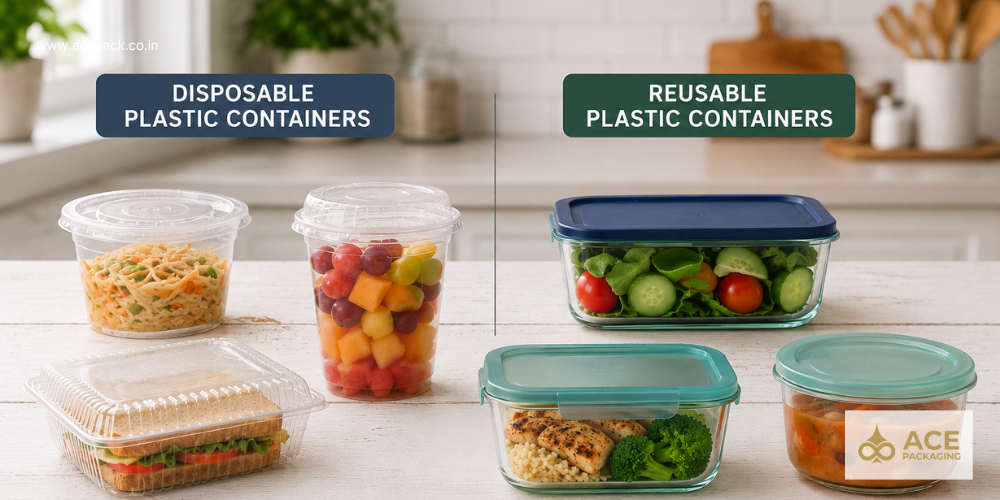
Reusable food containers are designed for repeated use and long-term durability. These containers are commonly made from high-quality materials that can withstand regular washing, refrigeration, freezing, and reheating.
Today, many food businesses prefer reusable plastic containers because they provide better strength, improved storage performance, and reduced waste generation. They are widely used in restaurants, cloud kitchens, catering services, and meal prep businesses.
One of the key reusable food containers benefits is cost efficiency over time. Although the initial investment may be higher compared to disposable packaging, reusable containers reduce the need for continuous repurchasing.
Modern reusable takeaway containers are also designed with leak-proof and airtight features, making them suitable for delivery operations and takeaway packaging.
Disposable food containers are single-use packaging solutions commonly used for takeaway, delivery, and quick-service food operations. These takeaway food containers are popular because of their convenience, affordability, and easy handling.
Many restaurants and delivery businesses use disposable containers for fast-moving operations where packaging speed and low upfront cost are priorities. Disposable packaging is especially common for events, food stalls, and large-volume takeaway orders.
However, businesses must also consider the long-term environmental effects associated with single-use packaging. Poor-quality disposable packaging may contribute to higher waste generation and operational inefficiencies.
Choosing between reusable and disposable packaging depends on factors such as business type, storage requirements, sustainability goals, and customer expectations.
| Feature | Reusable Food Containers | Disposable Containers |
| Durability | High | Moderate |
| Sustainability | Eco friendly | Higher waste generation |
| Long-Term Cost | Cost-effective | Continuous recurring cost |
| Food Protection | Better sealing and storage | Depends on packaging quality |
| Environmental Impact | Lower | Higher |
| Storage Efficiency | Better stackability | Limited durability |
One of the biggest differences in reusable vs disposable packaging is long-term sustainability. Reusable packaging helps reduce waste while improving operational efficiency.
On the other hand, disposable packaging still remains useful for businesses requiring quick-service packaging or low-cost temporary solutions.
For many businesses, reusable containers provide better long-term value because they:
However, the ideal packaging solution ultimately depends on operational needs and business scale.
While disposable packaging offers convenience, there are several limitations:
As sustainability becomes more important, many businesses are gradually shifting toward reusable and recyclable alternatives.
The demand for sustainable food packaging is increasing rapidly as businesses and consumers become more environmentally conscious. Companies are now prioritizing eco-friendly food containers that reduce waste and support responsible packaging practices.
One major focus area is plastic waste reduction. Businesses are exploring smarter ways to minimize single-use packaging while maintaining food safety and convenience.
Modern consumers often prefer businesses that invest in eco conscious packaging and environmentally responsible practices. This shift is encouraging brands to adopt green packaging solutions that balance functionality with sustainability.
Many restaurants, catering companies, and cloud kitchens are now investing in reusable packaging for food industry operations. Reusable packaging provides both operational and branding advantages.
Modern reusable containers for restaurants are designed to withstand repeated use without compromising quality. Businesses also benefit from improved storage organization and reduced packaging waste.
Whether choosing reusable or disposable packaging, businesses should focus on quality and functionality.
Durable Construction
High-quality durable food containers help protect food during storage and transport.
Leak-Proof Sealing
Leak-proof lids prevent spills and maintain food hygiene during delivery.
Airtight Storage
Proper sealing helps preserve freshness and improve shelf life.
Stackable Design
Efficient stacking improves kitchen organization and storage management.
Food-Grade Material
Safe and BPA-free plastic food containers ensure hygienic food storage and handling.
Choosing the best containers for food storage helps businesses improve efficiency while enhancing customer satisfaction.
Working with a reliable food packaging supplier is essential for maintaining packaging quality and consistency.
An experienced plastic container manufacturer can provide:
Businesses ordering bulk food containers or wholesale food containers should focus on suppliers with strong quality standards and reliable production capabilities.
Ace Pack provides reliable and high-quality food packaging solutions designed for modern food businesses. With a focus on durability, hygiene, and functionality, Ace Pack supports restaurants, cloud kitchens, caterers, and takeaway businesses with efficient packaging systems.
Ace Pack offers a wide range of packaging options tailored to different food storage and takeaway needs, helping businesses improve efficiency and customer experience.
Contact Ace Pack today for reliable food packaging solutions designed for growing food businesses.
The comparison between reusable food containers and disposable food containers ultimately depends on business goals, operational requirements, and sustainability priorities. Reusable packaging offers long-term durability, improved storage performance, and reduced environmental impact, making it an increasingly preferred solution for modern food businesses. Disposable packaging still remains useful for convenience-focused operations and quick-service applications. As the industry continues moving toward sustainable food packaging, businesses that invest in smarter and more efficient packaging systems are likely to gain stronger customer trust and long-term operational benefits.
.webp)


