
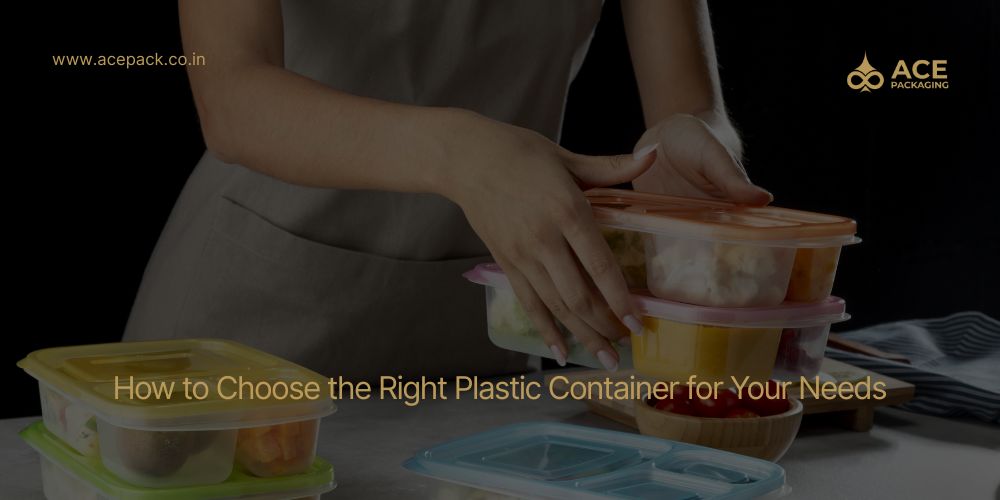
Plastic containers are everywhere, from kitchen and food delivery to retail packaging for industrial use and display. However, with the variety of shapes, sizes, and types to choose from, picking the best one could be a bit difficult.
If you're the owner of a restaurant, a producer, or just looking for storage solutions in your home, this information will assist you in selecting the right plastic container to meet your needs.
Start by asking: What will the container hold?
Your purpose determines the size, material, and design of the container.
| Use Case | Container Type Example |
| Food takeaway | Microwave-safe deli or meal containers |
| Home storage | Stackable airtight boxes |
| Industrial bulk storage | Heavy-duty crates |
| Retail display | Transparent PET jars or boxes |
| Freezer use | BPA-free freezer-safe containers |
Plastic containers are made of various types of material, each offering distinctive advantages.
Will the container be used for hot or cold items?
Temperature range plays a big role in container selection:
| Application | What to Look For |
| Microwave use | Microwave-safe, heat-resistant plastics |
| Freezer storage | Crack-resistant, freezer-safe materials |
| Oven use | Not suitable, use glass or silicone instead |
Avoid PET for microwaving as it can warp or melt under heat.
The container needs to be suitable for the contents and not have any wasted area, and should be:
Popular shapes:
A secure, leak-proof lid is vital for transport and storage, particularly for food items that contain oil or liquids.
Select containers using:
If your brand or lifestyle emphasizes eco-friendliness, consider:
This is crucial for companies in the food industry that want to meet ESG or eco-friendly packaging targets.
To use for commercial purposes: Check if the container is made of plastic:
Supports custom labels or stickers
Then, you should consider cost-efficiency. Some containers may cost more initially, but they offer superior quality, endurance, and reusability.
Compare:
Pro Tip: Order the samples before placing a quantity order.
The ideal plastic container needs to combine practicality with appeal. Whether you're packing biryanis, storing bulk ingredients, or simply displaying products for sale, picking the best option will increase efficiency, product safety, and overall customer satisfaction.
.webp)


