
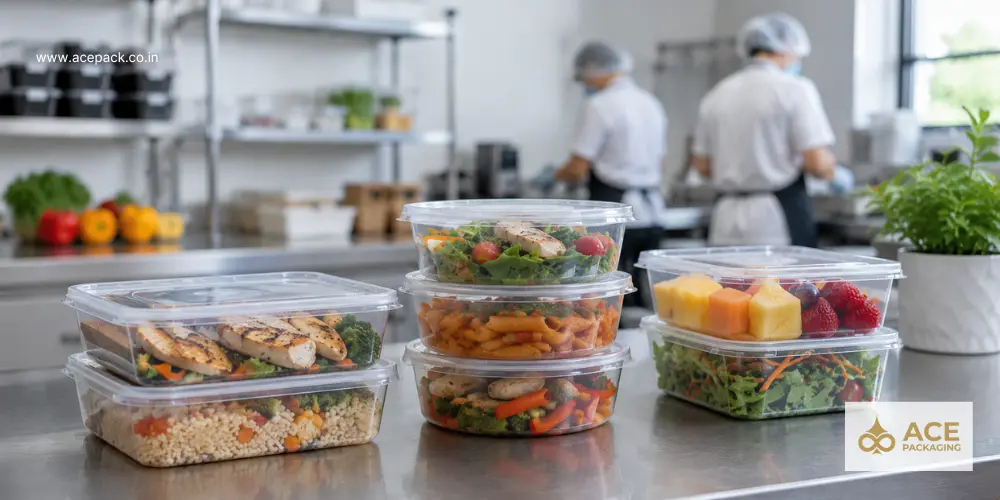
In today's competitive food industry, businesses are under constant pressure to improve productivity, reduce costs, maintain food safety standards, and meet growing customer expectations. Whether operating a restaurant, cloud kitchen, food processing facility, or manufacturing plant, achieving higher Operational Efficiency in Food Industry operations has become a key business objective.
While many companies focus on equipment upgrades and workforce optimization, packaging is often overlooked as a strategic tool for improving performance. However, modern Food Packaging Solutions play a crucial role in streamlining workflows, minimizing waste, improving inventory management, and supporting overall business productivity.
Food Packaging Efficiency refers to the ability of packaging systems, materials, and processes to support smooth operations, reduce waste, improve productivity, and optimize resources throughout food production and distribution activities.
In simple terms, packaging efficiency is not just about protecting food products. It is about creating a system that helps businesses move products faster, reduce errors, improve handling, and support better operational outcomes.
Modern Food Packaging Systems are designed to improve workflow efficiency while maintaining product quality and food safety compliance.
Food packaging has evolved far beyond its traditional role of product protection. Today, packaging directly affects production efficiency, storage management, transportation, inventory control, and customer satisfaction.
For many businesses, packaging serves as the connection between production, logistics, and distribution. Poor packaging decisions can create bottlenecks, increase operational costs, and reduce productivity. On the other hand, optimized packaging systems contribute to smoother workflows and stronger business performance.
Organizations investing in Food Packaging Management strategies often experience measurable improvements in packaging productivity and overall operational performance.
One of the biggest advantages of effective Food Packaging Operations is improved workflow management. Packaging solutions that are designed for operational efficiency simplify handling, storage, transportation, and processing activities.
When employees spend less time dealing with damaged packaging, repackaging products, or organizing inventory, productivity naturally increases.
Businesses that focus on Packaging Workflow Optimization often experience:
These improvements create a more organized and efficient work environment.
Efficient packaging materials and systems allow businesses to process products more quickly and consistently.
Improved Food Packaging Processes help reduce manual intervention, shorten packaging times, and support higher production volumes without compromising quality.
As production demands increase, packaging becomes an essential factor in maintaining operational efficiency.
Cost management remains a major concern for food businesses of all sizes. One of the most effective ways to achieve cost reduction is through strategic Food Packaging Optimization.
Optimized packaging solutions help businesses reduce unnecessary expenses while maintaining product quality and operational performance.
Poor packaging selection often leads to excess material usage and unnecessary waste.
By implementing better Food Packaging Solutions, businesses can:
Even small packaging improvements can generate significant long-term savings.
Product damage can create substantial operational and financial losses.
High-quality Food Packaging Containers help protect products during storage, transportation, and handling, reducing the likelihood of damage and product rejection.
This results in:
When packaging systems are designed effectively, employees can perform tasks more efficiently.
Businesses often see improvements in:
This contributes directly to better overall business productivity.
Modern Food Packaging Systems are designed to support large-scale production requirements while maintaining consistent performance.
As food businesses grow, manual packaging methods often become inefficient and difficult to manage. Advanced packaging systems help organizations maintain speed, accuracy, and quality across production lines.
Many businesses are implementing Packaging Automation technologies to improve throughput and reduce operational bottlenecks.
Packaging automation supports:
Automation also allows businesses to scale operations more effectively.
Consistency is essential for achieving reliable operational outcomes.
Reliable packaging systems ensure products are packaged uniformly, helping businesses improve:
Consistent packaging also simplifies storage and transportation activities.
Packaging affects every stage of the supply chain, from manufacturing and storage to transportation and final delivery.
Businesses that invest in Industrial Food Packaging Solutions often experience stronger Supply Chain Efficiency because products move more smoothly through operational processes.
Effective packaging makes products easier to store, identify, and manage.
Better packaging contributes to:
This helps businesses improve overall operational reliability.
Packaging that provides strong product protection reduces transportation-related losses and disruptions.
Well-designed packaging supports:
These benefits directly support operational efficiency and cost reduction goals.
Different sectors within the food industry have unique packaging requirements.
Restaurants require Food Packaging for Businesses that support takeaway and delivery operations while maintaining food quality and presentation.
Cloud kitchens depend heavily on packaging because customer satisfaction is directly linked to delivery performance. Efficient packaging helps improve order accuracy, food protection, and delivery reliability.
Manufacturers often seek Packaging Solutions for Food Manufacturers that improve production efficiency and support large-scale packaging requirements.
Food processors require durable packaging systems capable of handling high production volumes while maintaining food safety compliance.
Many organizations struggle with packaging-related inefficiencies that negatively affect productivity.
Using different packaging materials across operations can create workflow disruptions and inventory complications. Standardized packaging helps improve consistency and simplify operational management.
Packaging that is difficult to handle, store, or transport often reduces process efficiency and increases labor requirements.
Businesses that fail to evaluate packaging performance regularly may miss opportunities for operational improvements and cost savings.
Outdated processes often lead to bottlenecks, delays, and increased operational expenses.
Businesses seeking greater Food Packaging Efficiency should focus on continuous improvement and operational optimization.
Key strategies include:
These strategies help businesses improve productivity while reducing operational challenges.
As competition increases, businesses are recognizing the value of packaging as a strategic operational tool.
Organizations investing in Efficient Food Packaging often experience:
These benefits make packaging optimization a valuable investment for long-term business growth.
Ace Pack provides innovative Food Packaging Solutions designed to help businesses improve productivity, streamline operations, and achieve higher packaging efficiency.
Businesses choose Ace Pack because of:
By delivering dependable packaging solutions, Ace Pack helps food businesses improve operational efficiency while supporting long-term growth objectives.
In modern food operations, packaging is far more than a protective layer around products. It is a critical component of workflow management, productivity improvement, and business efficiency.
Organizations that prioritize Food Packaging Efficiency can achieve meaningful improvements in Food Packaging Operations, inventory management, supply chain performance, and overall operational effectiveness. Through better packaging systems, optimized processes, and strategic packaging management, businesses can reduce costs while increasing productivity and consistency.
As the food industry continues to evolve, investing in smarter Food Packaging Solutions will remain one of the most effective ways to enhance operational performance, improve profitability, and support sustainable business growth.
.webp)


