

Everyday food packaging needs to be practical, consistent, and easy to manage. Restaurants, caterers, cloud kitchens, food suppliers, and takeaway businesses regularly pack meals in different quantities, making the choice of packaging important for daily operations.
Natraj containers can be used for a variety of meal packaging and distribution requirements. Their different capacity options allow businesses to match packaging with portion sizes, food types, and serving requirements.
For businesses handling food every day, the right packaging system can make preparation, storage, transportation, and distribution easier to organize.
Food packaging is part of the daily workflow for many food businesses. Containers need to work efficiently during filling, handling, transportation, and final serving.
A suitable packaging system can help businesses with:
Using suitable food packaging containers for regular meal requirements can also help staff follow a consistent process during busy service periods.
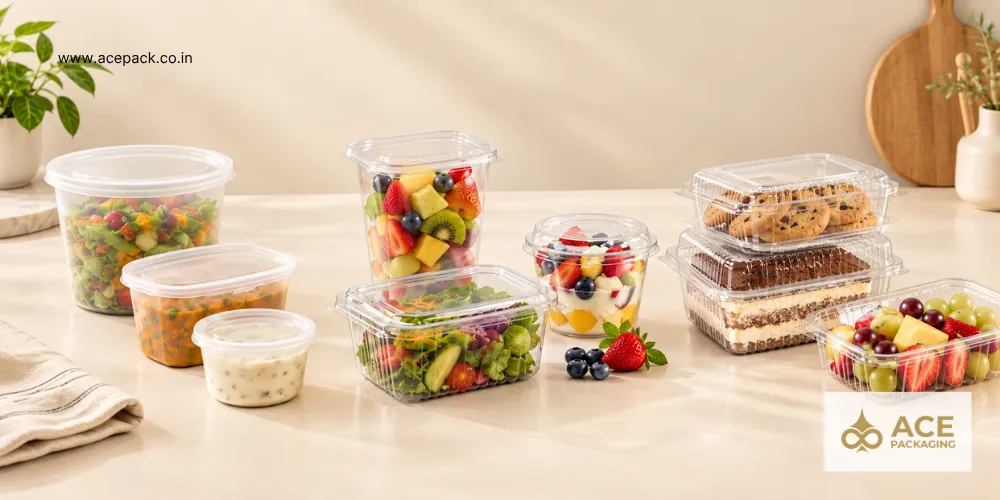
Different meals require different amounts of space. A small side dish does not need the same capacity as a complete meal, while larger portions may require additional room.
Natraj food containers can be selected according to the quantity and type of food being packed.
Businesses can consider:
This makes it easier to create a packaging system that suits the restaurant or food business rather than relying on one container size for every order.
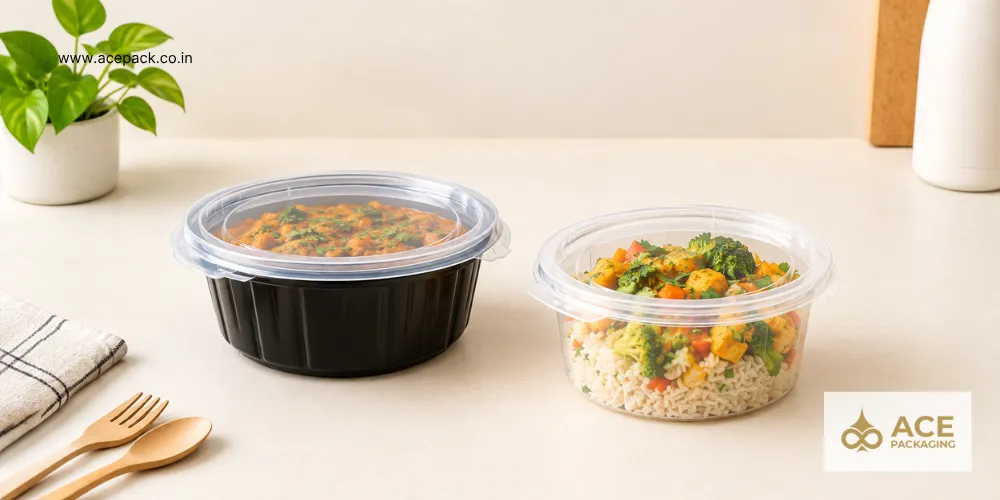
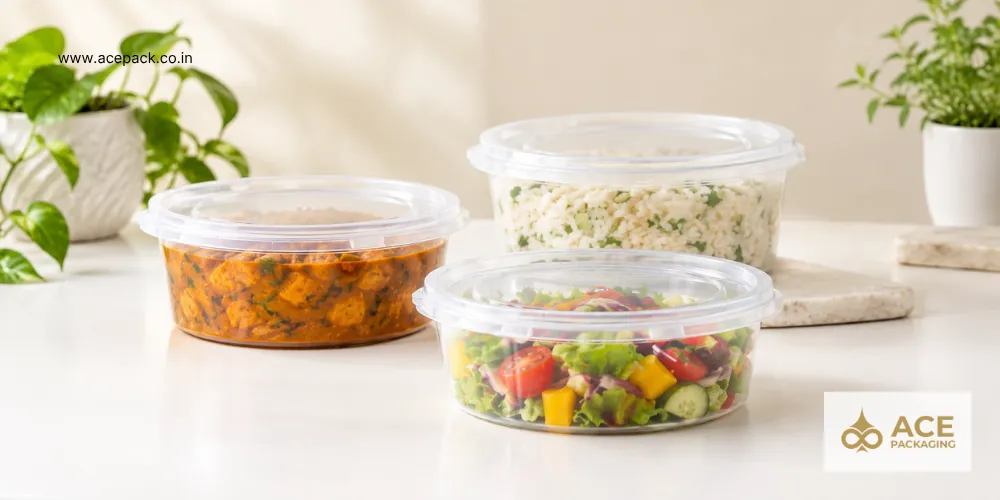
Everyday meals can include rice dishes, curries, vegetables, snacks, desserts, and combination meals. Each category can have different packaging requirements.
For example:
Using appropriate meal packaging containers can help businesses maintain more consistent portions across regular orders.
Container capacity should be based on the actual serving rather than simply choosing the largest available option.
When selecting a container, consider:
Identify the normal quantity served for each meal category. Standard portions make it easier to determine the appropriate container capacity.
Rice, noodles, vegetables, curries, and snacks occupy space differently. The container should accommodate the food comfortably without excessive compression.
Avoid filling containers completely to the top. Leaving appropriate space can make handling easier, particularly for foods that contain sauces or gravy.
Consider whether customers will eat directly from the container or transfer the food to another plate or serving dish.
Restaurants need packaging that can fit into a fast-moving kitchen environment. Staff should be able to identify and use the appropriate container without spending unnecessary time making packaging decisions.
Using defined food containers for restaurants can help create a simple system based on menu categories and portion sizes.
For example, restaurants can assign particular Natraj container sizes to:
This can make the packaging process easier to repeat across different shifts.
Takeaway orders require packaging that can move from the kitchen to the customer without creating unnecessary handling problems.
Suitable takeaway food containers should be selected according to the food and the way the order will be transported.
Restaurants should consider:
Using consistent packaging can also make it easier for staff to prepare takeaway orders during peak hours.
Food distribution can involve more handling than a normal takeaway order. Meals may be prepared in bulk, packed, stored temporarily, transported, and then distributed to multiple recipients.
This makes food distribution containers an important part of the overall process.
For distribution-based applications, businesses should consider:
When the same packaging system is used across large numbers of meals, staff can work more systematically and reduce unnecessary variation.
Meal-preparation businesses and caterers often prepare food in advance. Their packaging needs can therefore differ from restaurants that prepare individual orders.
Prepared meal containers should provide suitable capacity for the intended serving while making storage and distribution manageable.
They can be useful for:
The right capacity depends on the portion and food category rather than the application alone.
Standardization can make everyday packaging easier to control. Instead of selecting a container randomly for every meal, businesses can create a simple system based on their most frequently used portions.
For example:
This approach can help restaurants and food businesses maintain more consistent packaging practices.
It can also simplify staff training because employees can learn which container is normally used for each meal category.
Packaging inventory can become difficult when businesses keep too many different container types. Excess packaging options can take up storage space and make it harder to monitor stock.
Using a controlled range of plastic food containers can make inventory planning more straightforward.
Businesses can monitor:
This information can help businesses purchase packaging according to actual usage rather than guesswork.
Daily packaging involves more than placing food into a container. Staff need to portion meals, pack orders, move containers, organize them for pickup or delivery, and sometimes store them before distribution.
A consistent packaging system can simplify these repetitive tasks.
For businesses using restaurant food packaging, it can be helpful to establish clear internal guidelines covering:
Simple guidelines can reduce confusion during busy service periods.
When large numbers of meals are distributed, consistency becomes particularly important. Using suitable meal distribution packaging can help businesses maintain similar portion sizes and packaging formats across multiple orders.
This can be useful for:
A standardized packaging process can make it easier to count, organize, transport, and distribute meals efficiently.
Businesses can face avoidable problems when container selection is based only on convenience.
Common mistakes include:
A simple packaging plan can help prevent many of these issues.
Businesses can start by reviewing their current menu and identifying their most common meal categories.
Group similar foods together, such as:
Then, assign suitable Natraj containers to each category based on actual serving requirements.
Natraj containers can support everyday meal packaging by giving restaurants, caterers, takeaway businesses, and food distributors practical options for different portions and meal types.
By matching container capacity with food requirements and using a consistent packaging system, businesses can make daily preparation, takeaway handling, inventory management, and meal distribution more organized and efficient
.webp)