

Dairy, spreads, and prepared foods don't behave the same way once they're packed. Curd sets differently than it pours. Butter softens and sticks to whatever it touches. A prepared curry sloshes if the container flexes even slightly during transport. Businesses packing any of these categories in bulk quickly learn that container shape isn't a minor detail it's the difference between a product that arrives looking the way it left the kitchen and one that doesn't.
Round Containers show up across all three categories for a reason. Their curved profile handles pressure and movement more evenly than a container with corners, which matters more than it sounds like when the product inside is soft, semi-liquid, or prone to shifting.
Round Containers are food-grade plastic containers made from polypropylene (PP 05), available in a range of sizes from 225ML up to 1000ML. Each size comes with a tightly sealing lid, and the containers are stackable, BPA-free, and built to handle microwave, freezer, and dishwasher use. Smaller sizes are typically supplied in sets of 500 pieces per box.
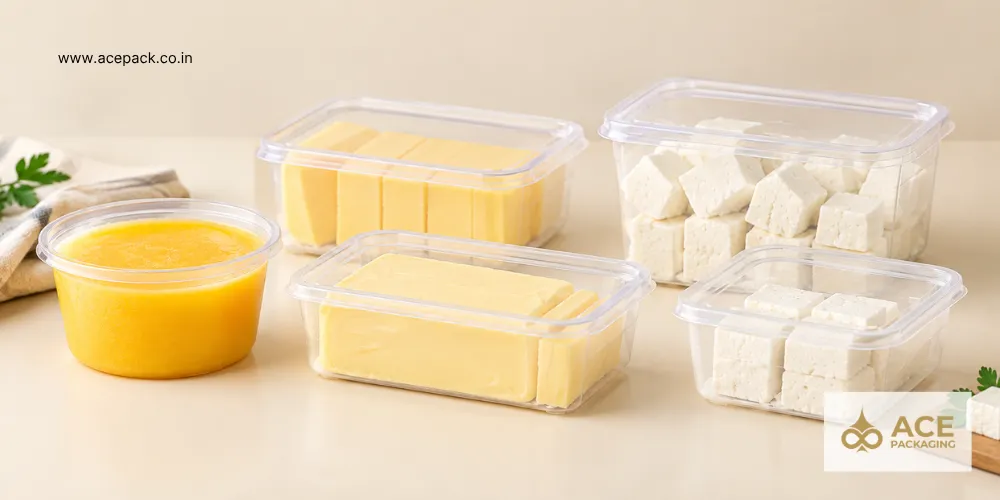
Some sizes also come with a transparent body, which lets a business or customer see the contents without opening the lid a small detail that matters more than it seems for dairy products and spreads, where checking freshness or remaining quantity at a glance saves time during both packing and retail display.
A round container doesn't have corners for product to get stuck in, air pockets to form under, or pressure to concentrate against. That single design difference plays out differently across each food category.
Dairy products curd, yogurt, paneer, cream often set or thicken inside the container itself. A round shape lets the product settle evenly without pooling in corners, and a properly sealed lid keeps moisture in, which matters for texture as much as shelf life.
Spreads butter, jams, chutneys, dips need a container that resists sticking and scoops cleanly. The curved interior wall of a round container makes it easier to get the last bit out with a spoon or knife than a container with sharp corners, where product tends to collect and go to waste.
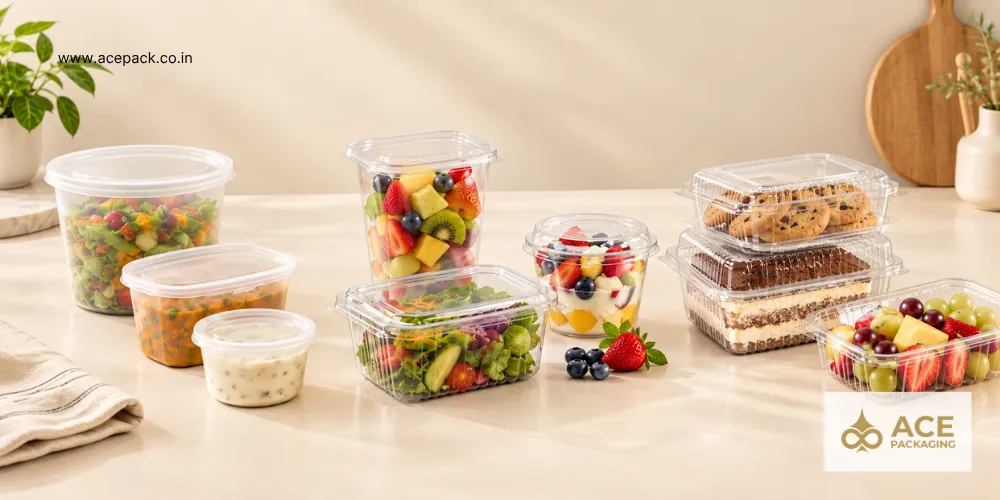
Prepared foods curries, gravies, sauces generate internal pressure and movement during transport. Round containers distribute that pressure evenly around the wall instead of concentrating it at corners, which reduces the chance of a lid lifting or a seam splitting under load.
For a deeper look at why round shapes specifically handle liquid and semi-liquid movement well, Ace Packaging's earlier blog on round containers for liquid and semi-liquid food covers the mechanics of that in more detail.
Not every product in these three categories needs the same size or handling, so it's worth working through a few questions before ordering in bulk.
Once the product is packed, a few practical issues tend to come up that are worth planning around in advance.
Using the same size for every product line. Butter and curry don't behave the same way, and forcing both into identical containers usually means one product is packed inefficiently.
Skipping a seal test with the actual product. A lid that holds well with water might behave differently with a thick spread or a hot prepared dish. It's worth testing with the real product before a full bulk order.
Ignoring visibility needs at retail. Businesses selling dairy or spreads directly to consumers sometimes default to opaque containers when a transparent option would support the product better on a shelf.
Overlooking reorder timing across multiple sizes. Running several Round Container sizes for different product lines means tracking several reorder points, and it's easy to run short on one while overstocked on another.
Ace Packaging manufactures Round Containers alongside a wider catalog that includes Deli Series Containers, also built for takeaway and prepared-food applications, and Portion Cups for smaller quantities of spreads, dips, or condiments that need to travel separately from the main product.
A few reasons food businesses rely on Ace Packaging for dairy, spread, and prepared-food packaging:
Businesses deciding between Round Container sizes for dairy, spreads, or prepared foods can reach out to the Ace Packaging team to review sizing and order volumes before committing to a bulk order.
Dairy, spreads, and prepared foods each put different demands on packaging, but Round Containers handle all three reasonably well because of one simple design choice no corners for product to get stuck in or pressure to build against. Matching the right size and, where useful, a transparent option to the specific product remains the most reliable way to get consistent results across a packing line that handles more than one type of food.
.webp)

